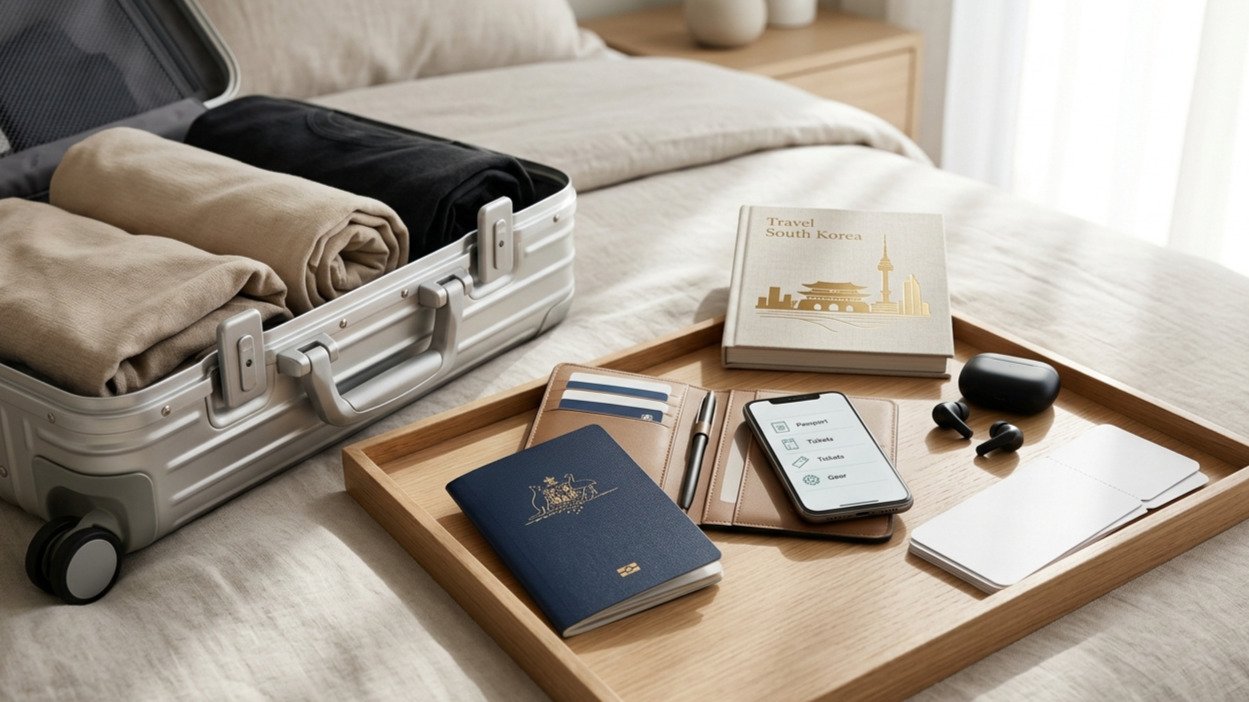
South Korea entry requirements for Australians are currently quite simple for a short holiday, but there are a few important things to prepare before you fly.
Australian passport holders can currently visit South Korea as tourists for up to 90 days without applying for a visa, while Australia remains temporarily exempt from the K-ETA requirement until 31 December 2026.
However, K-ETA exemption does not mean there is nothing to prepare.
For many Australian travellers entering Korea without a valid K-ETA, the e-Arrival Card is now an important part of the pre-travel checklist.
The good news is that the process is straightforward, and most of your preparation can be completed online shortly before departure.
Entry information checked: 16 August 2026. Entry, health and customs requirements can change at short notice, so always confirm the latest information through the official government sources linked in this guide before travelling.
Table of Contents
South Korea Entry Requirements for Australians: Quick Guide
For a typical Australian passport holder travelling to South Korea for a short holiday:
Passport: Required
Tourist visa: Not required for eligible tourist stays of up to 90 days
K-ETA: Australians temporarily exempt until 31 December 2026
e-Arrival Card: Required for many travellers entering without a valid K-ETA
Official e-Arrival Card fee: Free
Accommodation information: Keep your first Korean address handy
Health and quarantine: Check shortly before departure
Customs: Check restrictions before travelling with food, medicines or other regulated items
These rules apply to a normal short tourist visit.
If you plan to work, study or stay longer in Korea, different immigration requirements may apply.
Do Australians Need a Visa for South Korea?
Understanding South Korea entry requirements for Australians starts with one of the most common questions: do Australian passport holders need a visa?
For most short holidays, no.
Australian passport holders can currently visit South Korea as tourists for stays of up to 90 days without applying for a visa.
The Australian Government confirms the current arrangement through Smartraveller’s South Korea travel advice.
This makes Korea a relatively straightforward destination for Australians planning a holiday to Seoul, Busan, Jeju or other parts of the country.
However, visa-free tourist entry should not be confused with permission to work or remain in Korea indefinitely.
If you are travelling for employment, study, a long-term stay or another purpose, check the Korean visa requirements that apply to your circumstances before booking.
Do Australians Need a K-ETA?
This is one of the most confusing parts of planning a Korea trip because older information is still easy to find online.
At present, Australian passport holders are temporarily exempt from applying for a Korea Electronic Travel Authorization (K-ETA).
The current exemption for Australian passport holders runs until:
31 December 2026
So if you’re taking a normal short holiday from Australia to Korea during the exemption period, you generally don’t need to apply for a new K-ETA.
Previously approved K-ETAs can remain valid until their individual expiry dates.
However, the current exemption has an end date, and what happens after 31 December 2026 will depend on future South Korean Government policy.
Before every trip, check the official Korea Electronic Travel Authorization website and current Australian Government travel advice.
Immigration rules are one area where an old social media post, YouTube video or travel article should never be your final source.
What Is the Korea e-Arrival Card?
This is the requirement Australian travellers are more likely to encounter while the K-ETA exemption remains in place.
South Korea operates an electronic entry declaration system called the e-Arrival Card.
It allows eligible travellers to submit their entry declaration online before arriving in Korea.
The Korean Government lists K-ETA-exempt travellers among those subject to the entry declaration requirement.
Travellers holding a valid K-ETA are among the groups exempt from submitting an entry declaration.
The official system also provides a simple navigator that helps you check whether you personally need to submit one.
Before travelling, use the official Korea e-Arrival Card website rather than relying on a third-party travel website.
When Should You Complete the e-Arrival Card?
You don’t need to complete it when you first book your holiday.
The official system allows travellers to complete and submit the e-Arrival Card within three days before arriving in South Korea.
That means it belongs on your final pre-departure checklist rather than your initial trip-planning list.
Before starting, have the following information ready:
- Your valid passport
- Arrival and departure information
- Flight details
- Accommodation information in Korea
- Contact information
If you’re staying at a hotel, save the full hotel address before starting the form.
That small step makes completing your arrival information much easier.
Most importantly, the official e-Arrival Card service is free.
Be Careful With Fake e-Arrival Card Websites
This deserves its own warning.
Unofficial travel-document websites can appear in search results and may look surprisingly similar to government services.
The official Korean Government e-Arrival Card service does not require a fee.
If a website claiming to provide the Korean e-Arrival Card unexpectedly asks for payment, stop and check the website address carefully.
Use the official Korean Government e-Arrival Card service directly.
Avoid clicking unfamiliar sponsored websites simply because they appear above the official result in a search engine.
Can You Still Use a Paper Arrival Card?
Yes.
Current official guidance allows travellers who are subject to an entry declaration to use the applicable paper declaration or electronic e-Arrival Card.
For many travellers, however, completing the electronic version before flying may be easier than dealing with paperwork after a long international flight.
Check the current rules again shortly before departure because Korea’s entry procedures can change.
Travelling to Korea With Children
Families should check the requirements for each traveller, not just the adults.
Children travelling on Australian passports need their own valid travel documents and must meet the relevant Korean entry requirements.
Do not assume that completing a parent’s travel information automatically covers everything required for a child.
Before departure, use the official e-Arrival Card eligibility navigator to check each family member’s situation.
For family travel, it is also useful to keep important information together in one secure folder on your phone.
Save:
- Flight bookings
- Accommodation confirmations
- Travel insurance
- Airport transfer information
- Important reservations
Keep important documents available offline as well.
This can be especially useful when you’re travelling with children and arriving after a long overnight flight.
Do Australians Need Q-CODE?
Not every Australian tourist needs to complete Q-CODE before travelling to Korea.
However, health and quarantine requirements can apply in certain circumstances.
Current Australian Government travel advice says travellers arriving from designated Quarantine Inspection Required Areas, including Australia, who show symptoms of illness may need to register through Korea’s Q-CODE system before arrival or complete a health questionnaire on arrival.
Health requirements can change more quickly than ordinary tourist entry rules.
For that reason, check the latest Australian Government Smartraveller advice shortly before departure rather than completing unnecessary paperwork months in advance.
Keep Your First Korean Address Handy
This sounds minor, but it can save unnecessary stress after a long flight.
Before leaving Australia, screenshot your first accommodation booking.
Keep the following information accessible:
Hotel or accommodation name
Full address
Telephone number
Booking confirmation
Save it somewhere you can access without mobile data.
Airport Wi-Fi is useful, but you don’t want your first hour in Korea to depend entirely on getting an internet connection.
A simple offline travel folder can make arrival much smoother.
What Happens When You Arrive in Korea?
For most Australian tourists, arriving in Korea is fairly straightforward once the necessary documents are prepared.
After leaving the aircraft, follow the airport signs toward immigration.
Have your passport and relevant arrival information ready.
After immigration, collect your checked luggage and proceed toward customs.
If you’re carrying goods that need to be declared, declare them rather than guessing.
Once immigration and customs are complete, you’re officially in Korea.
For many Australians, Incheon International Airport will be their first real introduction to the country.
And from here, the next question becomes much more enjoyable:
What’s the best way to get from Incheon Airport to Seoul?
A later OzKore Korea Guide will compare the main options, including AREX trains, airport buses, taxis and private transfers.
Check Korean Customs Rules Before Packing
South Korea entry requirements for Australians aren’t only about passports and immigration.
What you put in your suitcase matters too.
The Korea Customs Service publishes official rules covering traveller allowances and goods that need to be declared.
These can include:
- Food
- Agricultural products
- Alcohol
- Tobacco
- Perfume
- Medicines
- High-value goods
- Restricted items
The current passenger clearance information lists a general duty-free allowance of up to US$800 for eligible traveller goods, with separate limits and conditions applying to certain products.
Allowances and restrictions can change, so check the current Korea Customs Service information before packing.
This is particularly important if you’re carrying food, medicines, agricultural products or expensive goods.
When in doubt, check before you pack.
Don’t Forget Travel Insurance
Visa-free travel doesn’t mean risk-free travel.
A cancelled flight, lost suitcase or unexpected medical problem can quickly turn an affordable holiday into a very expensive one.
Before leaving Australia, check what your travel insurance actually covers.
Pay particular attention to:
- Overseas medical expenses
- Flight cancellations
- Travel delays
- Lost or delayed luggage
- Pre-existing medical conditions
- Activities you plan to do in Korea
The cheapest policy isn’t necessarily the best value if important situations are excluded.
Haven’t Booked Your Flight to Korea Yet?
Entry preparation actually comes one step after deciding how you’re going to get there.
Australians have very different flight options depending on where they live.
Travellers from Sydney, Melbourne and Brisbane can compare direct and connecting services, while Perth travellers generally need to look more closely at practical one-stop routes.
Connection time can matter almost as much as airfare.
A ticket that saves a little money may not feel like a bargain if it leaves you sitting in an airport for six or eight hours.
Our Flights from Australia to South Korea: Best Direct & Stopover Options guide compares the main routes and explains what Australians should check before booking.
Once your flight is booked, come back to this checklist as your departure date gets closer.
Before You Leave Australia: Final Checklist
Before departure, check the latest South Korea entry requirements for Australians one final time, as immigration and arrival rules can change.
✓ Passport ready
✓ Confirm your trip qualifies for visa-free entry
✓ Check the latest K-ETA rules
✓ Complete your e-Arrival Card or applicable arrival declaration
✓ Save your Korean accommodation details
✓ Check current health and quarantine requirements
✓ Check Korean customs rules for unusual items in your luggage
✓ Save flight and hotel confirmations offline
✓ Confirm travel insurance
✓ Check official travel advice for last-minute changes
Most of these checks take only a few minutes.
Doing them before leaving home is much easier than trying to solve a problem at the airport.
Final Thoughts
South Korea entry requirements for Australians are currently relatively straightforward for a normal short holiday.
Australian passport holders can currently visit South Korea as tourists for up to 90 days without applying for a visa, while Australia remains temporarily exempt from K-ETA until 31 December 2026.
For Australians travelling without a valid K-ETA, understanding the Korean arrival declaration system is an important part of preparing for the trip.
Fortunately, the official e-Arrival Card is free and can be completed online within three days before arrival.
The most important rule is simple:
Always check the official information again before you fly.
Entry, health and customs requirements can change, and information that was correct when you booked your trip may not necessarily be the same on your departure date.
Once that’s done, the boring part is over.
Your flight is booked.
Your passport is ready.
Your Korea trip can finally begin.
If you’re still deciding how to get there, start with our Flights from Australia to South Korea: Best Direct & Stopover Options guide.
And once you land, the next OzKore Korea Guide will take you from Incheon Airport into Seoul.
Frequently Asked Questions
Do Australians need a visa for South Korea?
Australian passport holders can currently visit South Korea as tourists for stays of up to 90 days without applying for a visa, subject to applicable entry conditions. Always check official government information before departure.
Do Australians need a K-ETA?
Australian passport holders are temporarily exempt from K-ETA until 31 December 2026. Check the official K-ETA information before travelling because the policy may change after that date.
Do Australians need an e-Arrival Card?
K-ETA-exempt travellers are among those subject to Korea’s entry declaration requirement. Travellers holding a valid K-ETA are among the exempt groups. Use the official e-Arrival Card navigator to check your individual situation.
When can I complete the Korea e-Arrival Card?
The e-Arrival Card can be submitted online within three days before arriving in South Korea.
Does the official Korea e-Arrival Card cost money?
No. The official Korean Government e-Arrival Card service is free.
Can I use a paper arrival declaration instead?
Current guidance allows travellers subject to an entry declaration to use the applicable paper declaration or electronic e-Arrival Card. Check the latest instructions shortly before travelling.
What should Australians prepare before flying to Korea?
Check your passport, current visa and K-ETA requirements, arrival declaration requirements, accommodation information, travel insurance, health requirements and Korean customs rules shortly before departure.