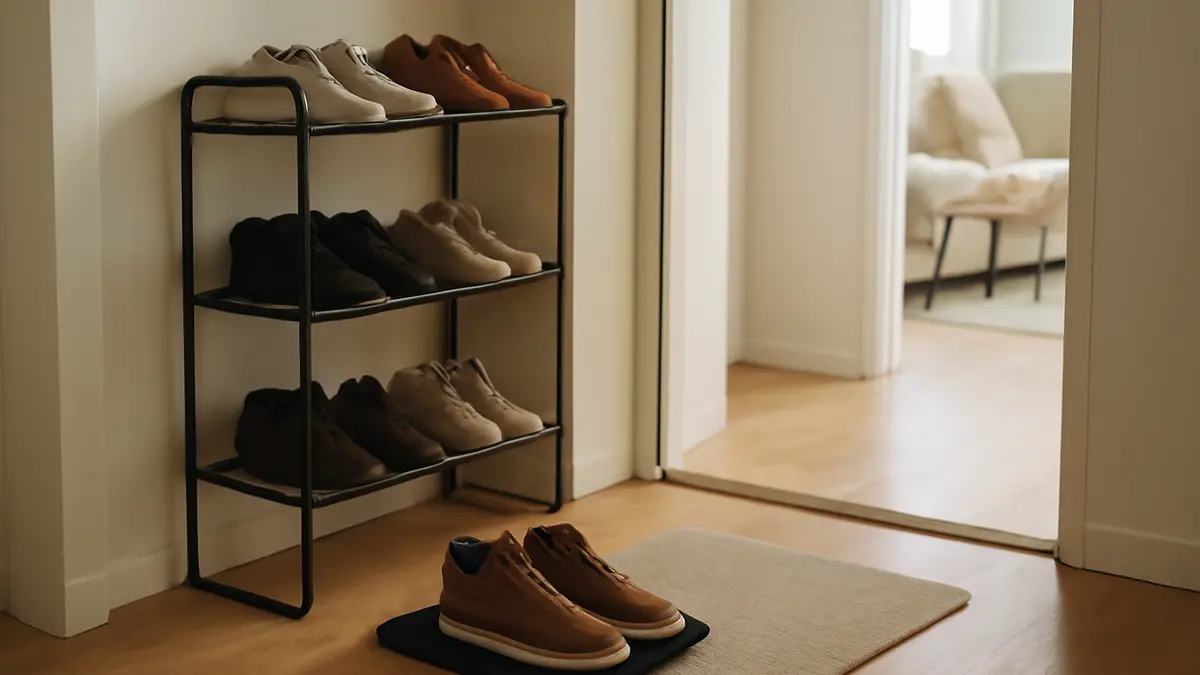
A cramped entryway can turn one damp pair of shoes into a problem that greets you every time you open the door. The tempting fix is to hide everything in a closed cabinet or cover the smell with fragrance. In a small rental, that often makes the underlying issue worse because moisture stays trapped.
Quick answer: To reduce shoe odour in a small rental entryway, treat the space as a drying and storage system rather than a scent problem. Keep damp shoes out of enclosed storage, rotate pairs, improve safe airflow and choose a removable organiser only after measuring the available space.
You do not need to drill into walls or buy a bulky cabinet. A few deliberate zones and a simple daily routine can make a narrow entrance easier to live with.
Why shoe odour keeps returning in a closed entryway
Smelly feet are commonly linked to a build-up of sweat and bacteria, and fungal infections can also be a cause, according to the NHS. Shoes can hold onto that moisture after you take them off. If they go straight into a box, deep basket or tightly packed cabinet, they have little chance to dry before the next wear.
That is why an air freshener may change the smell briefly without solving the recurrence. The useful question is not “How do I deodorise this cupboard?” but “Which pairs are still damp, and where can they dry without taking over the hallway?”
Start by noticing the pattern for several days. Is the smell strongest after rain, after exercise, near a particular pair, or when the front door has been shut all day? A single pair that never dries properly needs a different response from a generally humid entryway.
Measure first, then reduce shoe odour in a small rental entryway
Before bringing in any storage, measure the narrowest usable part of the entry. Check width along the wall, usable depth without narrowing the walking path, height below hooks or switches, and the door swing. Also identify every vent, grille and existing air supply. The EPA advises residents not to block vents or grilles.
Write down the number of pairs that are genuinely in weekly use. This matters more than the total number you own. Your everyday footwear needs an accessible drying zone; rarely worn shoes can live elsewhere once they are clean and dry.
| What to check | Why it matters | Practical choice |
|---|---|---|
| Clear walking depth | A deep cabinet can make a tight entrance frustrating or unsafe. | Choose the shallowest removable rack that leaves a comfortable route. |
| Door swing | Doors can hit shoes, racks or hanging storage. | Mark the swing on the floor before buying anything. |
| Vent and grille positions | Storage must not obstruct air movement. | Keep the area around them clear. |
| Pairs used each week | Too many daily pairs create a permanent pile. | Give active pairs priority in the entryway. |
| Damp versus dry shoes | Damp footwear needs air, not concealed storage. | Create separate drying and storage zones. |
This measurement-first step protects you from a common rental mistake: buying an organiser because it fits the wall, then discovering it blocks the door, catches bags or seals in wet footwear.
Set up four simple zones
A small entrance works better when each item has a job. You are not aiming for a showroom. You are making the next arrival home easier.
1. The arrival zone for damp shoes
Place a washable mat, tray or other removable surface near the door for shoes that are wet from rain, sweat or a long day. Its job is to contain dirt and moisture while the shoes begin to air. Clean it according to its care instructions, rather than letting grit and dampness build up underneath.
Do not put damp shoes straight into an enclosed cabinet, lidded box or sealed bag. The catch is that a tidy-looking solution can quietly preserve the conditions that keep odour returning.
2. The drying zone
Give active pairs an open, breathable place to dry. This might be a removable open rack, a freestanding shelf or another arrangement that does not crowd each shoe against the next. Keep it clear of HVAC vents and grilles, and do not use unsafe direct heat or appliances against footwear. Follow the footwear and appliance manufacturers’ instructions.
If the shoe design and care instructions allow, removing an insole can help you inspect whether the inside is still damp before returning it to use. Do not force out glued or non-removable parts.
3. The dry-storage zone
Only shoes that feel dry belong in longer-term storage. An open shelf is often the simpler choice for frequently used pairs because you can see them and air can move around them. A breathable hanging organiser or removable rack can be useful where floor space is scarce, provided it does not interfere with the door or required clearances.
Closed storage is not automatically wrong. It simply belongs at the end of the process, not the beginning. Use it for dry, less frequently worn footwear, and do not assume one organiser suits every entryway.
4. The exit zone
Keep tomorrow’s dry pair easy to reach. This small detail supports rotation: the NHS advises letting shoes dry before wearing them again and avoiding the same shoes or socks on consecutive days. If the available pair is already by the door, you are less likely to reach for yesterday’s damp trainers.
Make drying and foot care part of the routine
The most effective system is usually boringly consistent. When you come home, place damp shoes in the arrival or drying zone. Once dry, return them to their storage place. Then choose another pair next time if you can.
The CDC recommends washing feet daily, drying them completely, changing socks at least once a day and changing shoes regularly to help prevent or control moisture-related foot problems. In practical terms, the entryway routine works best when it is paired with dry feet and fresh socks. Storage cannot compensate for repeatedly putting moisture back into the same pair.
- At the end of the day, separate noticeably damp shoes from dry ones.
- Allow shoes to dry before reuse instead of relying on a fragrance product.
- Put dry shoes back in their assigned space, so the entry does not become a mixed pile.
- Wash mats, wipe removable storage surfaces and follow care labels for washable insoles or footwear.
- Keep only the pairs you use regularly in the entrance.
Avoid treating baking soda, charcoal, essential oils, ozone devices, UV gadgets or household disinfectants as a universal answer. They are not a substitute for drying and source control, and product or material safety can vary.
Improve airflow without changing the rental
Ventilation helps remove indoor pollutants, and the EPA says opening windows or doors when weather permits can increase ventilation. Exhaust fans that vent outdoors can also help. Use what your home already has, while following building rules and keeping the entry secure.
For most renters, passive airflow is the practical starting point: avoid overfilling shelves, leave space around active shoes and avoid placing storage across air supplies. A portable fan may help move air in a room when used safely and according to its instructions, but it should not blow against unsafe heat sources or create a trip hazard in the entrance.
If the home often feels damp, a humidity gauge can give you a clearer picture than smell alone. The EPA recommends keeping indoor relative humidity between 30% and 50%. That range is a home-wide target, not a promise that every shoe will dry at the same speed. Rainy weather, shoe materials and ventilation all affect drying time.
When the problem is bigger than shoe storage
Sometimes the entryway is pointing to a building issue. The EPA notes that residents can often remove sources, unblock air supplies or temporarily open windows, but building-level problems may need attention from the owner or manager. Report ongoing leaks, visible moisture, persistently damp building surfaces or ventilation faults through your usual rental channel. Take dated photos and keep your request focused on the condition and its location.
Also separate a room problem from a foot-health problem. If persistent smelly feet do not improve with self-care or affect daily life, the NHS advises seeking medical advice because an underlying condition may need treatment. Itching, rash, cracking or skin damage are good reasons not to rely on an entryway fix alone.
FAQ
Should I buy a closed shoe cabinet for a small entry?
Only after you have a way to dry active shoes first. A cabinet can be useful for dry, less frequently used footwear, but sealing damp shoes away can keep the odour cycle going.
What is the best renter-friendly shoe storage?
The best option is the one that fits your measured clearance, leaves vents unobstructed and suits the number of dry pairs you need to store. Open or breathable removable storage is often more useful for active footwear than a deep enclosed unit.
How often should I rotate shoes?
Rotate whenever possible so shoes have time to dry before you wear them again. The NHS specifically advises avoiding the same shoes on consecutive days.
Start with one small reset tonight: pull out the shoes currently by the door, separate dry pairs from damp ones and create an open place for the damp group. Once drying happens before storage, the rest of the system becomes much easier to maintain.